13 Omens designer explains how its shared dice bag builds horror
Paizo designer Jason Bulmahn has explained how 13 Omens turns the structure of a horror story into a shared dice system. His October 22 design diary traces the game back to the idea of hiding dangerous dice in a bag, so that every character check can carry uncertainty beyond the normal chance of failure.
Paizo designer Jason Bulmahn has explained how 13 Omens turns the structure of a horror story into a shared dice system. His October 22 design diary traces the game back to the idea of hiding dangerous dice in a bag, so that every character check can carry uncertainty beyond the normal chance of failure. The system
ties the arrival of Omen Dice to the story’s acts. As the act number rises, an Omen Die is more likely to cause a wound. Bulmahn describes this as the mechanism that pushes the table toward an increasingly dangerous climax while leaving room for earlier moments of relief. The diary also explains a simplification during
playtesting. Early character drafts used fourteen aspects and more complicated ratings. The eventual Edge and Flaw approach adds a d6 and keeps the highest or lowest two dice, providing a more immediate way to represent an advantage or setback without stopping the story for extensive calculations. This is a look at the
game’s design rather than a second launch announcement. Bulmahn also says the team is exploring longer play involving surviving characters, but he does not announce a finished campaign supplement, release date or additional product. Readers can distinguish the rulebook’s existing horror structure from those developing
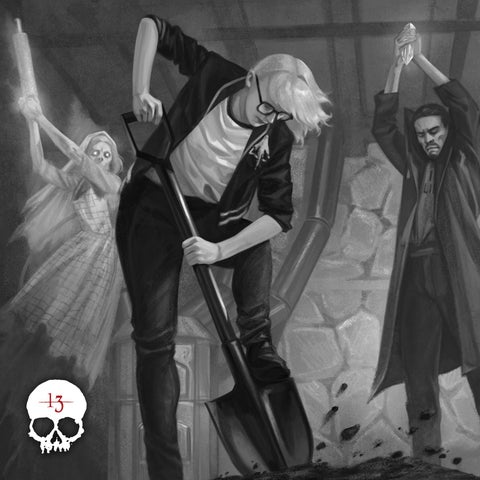
ideas. Official source. Image credit: Paizo; official The Mechanics of Horror illustration.
Open the interactive version on https://mythscribe.cloud/blog/13-omens-designer-explains-how-its-shared-dice-bag-builds-horror-october-2026.